Showing posts with label Research. Show all posts
Showing posts with label Research. Show all posts
Thursday, 10 December 2015

Wednesday, 2 December 2015

Sunday, 15 November 2015
Sound
We learnt about sound, how it is used to create effect and what are the different types of sounds. Here is what I have learnt about sound:
Digetic sound: The things the characters can here, like dialogue and sounds where they are filming the scene.
Non-digetic sound: Sounds that the characters cannot hear, like music or Foley sounds.
Synchronous sounds = Sounds that are matched with what is viewed. E.g. See your phone and hear ringing. This is digetic sound.
Asynchronous sounds = The sounds you hear but can't see on the screen. E.g. Siren but no ambulance. This is also digetic sound.
Ambient sound: Background noises (e.g. Wind, gate swinging, planes). These make a soundscape.
Voice over: A narrator talks over a film, this is a non-digetic sound.
Melody: A distinctive tune.
Symphonic: Music performed by a large orchestra.
Atonal: Music having no established key.
Rhythmic: Percussive sounds forming a beat.
Dissonant: Discordant (non-harmonious) combination of sounds.
Digetic sound: The things the characters can here, like dialogue and sounds where they are filming the scene.
Non-digetic sound: Sounds that the characters cannot hear, like music or Foley sounds.
Synchronous sounds = Sounds that are matched with what is viewed. E.g. See your phone and hear ringing. This is digetic sound.
Asynchronous sounds = The sounds you hear but can't see on the screen. E.g. Siren but no ambulance. This is also digetic sound.
Ambient sound: Background noises (e.g. Wind, gate swinging, planes). These make a soundscape.
Voice over: A narrator talks over a film, this is a non-digetic sound.
Melody: A distinctive tune.
Symphonic: Music performed by a large orchestra.
Atonal: Music having no established key.
Rhythmic: Percussive sounds forming a beat.
Dissonant: Discordant (non-harmonious) combination of sounds.
Similar film title research
In order to understand our own title sequence, and the order in which to present our titles, we had to conduct some research into films that are similar to ours and the title sequences that they have. The films that we have chosen are: Napoleon Dynamite because of its unique use of titles and also Now and then (1995) which shows the young and older versions of the characters which we want to incorporate into our film opening. Here they are:
Friday, 6 November 2015
Film Title analysis
Mission Impossible: Ghost Protocol title scene
Today in lesson we where asked to choose a film with very interesting film titles in which we could analyse and which will help us to determine in which order the titles run and which person in the making of the film is considered having the most important role. These below are the titles which contain the main actors and directors etc. from the large ensemble cast.

Time on screen:
3 seconds long
1) The first title that pops up in the Mission Impossible: Ghost protocol title sequence is the production companies, it is the first company listed maybe because it is the most important. The style of the background is a explosive wire being set on fire and travels along the scene of an underground, which has an eerie feel.

Time on screen:
3 seconds long
2)This is the second title with a film production company on but this film company does not stand out as well against the background because there is no light shining on the name.

Time on screen:
3 seconds long
3) This is the third and final production company which has the same graphics and same font size as the previous titles, meaning that it has the same importance as the second production company.

Time on screen:
3 seconds long
4) The main character who is played by Tom Cruise is shown first on the credits, because he is the most well known actor in the film.

Time on screen:
3 seconds long
5) This is the main title of the film. The writing is very bold and bright, therefore stands out on the dark, dull background. The scene is in a sewage tunnel underground, which shows a sense of adventure.

Time on screen:
1.5 seconds long
6) This is the second title of the film because the film is part of a sequel, the titles have to state which sequel it is because there are multiple other films in the franchise. Due to the nature of its name, it is called 'ghost' protocol and when this title scene finishes the letters fade into the darkness almost like a ghost.

Time on screen:
2 seconds long
7) This is the second cast member in the title sequence to be shown, it is Jeremy Renner and has a similar animation and design as the font for Tom Cruises title. The scene is set in an office room and has a character investigating into the darkness of the room.

Time on screen:
1.5 seconds long
8) This is the third and final cast member to be shown on their own in a title scene because Simon Pegg is also a very well known actor. The writing of his name is very similar to the other two actors but the only thing different is that the background has more light in it.

Time on screen:
2 seconds long
9) These are all actors/actresses in the film but are not as well known as the higher earning actors therefore as shown in a title of three actors together including Josh Holloway, Anil Kapoor and Lea Seydoux. This scene has graphics so the writing looks like it is floating underwater and is a lighter scene than previously.

Time on screen:
2.5 seconds long
10) After the celebrity cast have been introduced the next title is still underwater and the writing is still plain and action like. This title is showing who was in charge of the casting for the film, which is a very important role.

Time on screen:
2 seconds long
11) The 11th title is in a special agents office showing a missile and the writing saying "Visual Effects Supervisor" is still similar size to previous titles but the writing is positioned more to the right to fight around the missile prop.

Time on screen:
2.5 seconds long
12) This title scene is from a birds eye view of a tall building in a city and the whole feel is very futuristic. The font of the Co-producers is a lot smaller that all previous title scenes but it is still in the same style.

Time on screen:
2 seconds long
13) This is very similar to the previous slide but is showing two more co-producers who helped to produce the film. And the scene is still very much the same.

Time on screen:
2 seconds long
14) This title shows who the music is by and the scene is very light. There is good use of props in this scene with the climbing equipment and the goggles which show the action in the film.

Time on screen:
1.5 seconds long
15) This title is very creative which fits well with the idea of introducing the costume designer, who is called Michael Kaplan. The title has a fast sports car speeding along the street, which shows the viewer instantly that the film is going to be face paced.

Time on screen:
2 seconds long
16) This title is to show who the film was edited by, Paul Hirsch is by himself on this title showing that he is the main editor of the film and is superior to other editors. The background is of a high tech computer system which also shows that the films genre will be action.

Time on screen:
2 seconds long
17) This is a title to introduce the executive producer who has the overall say on how the film is produced. The background is lighter than the other scenes but the text is the same.

Time on screen:
2.5 seconds
18) The third title to include producers on has three names all on one title. And none of the names are larger than the other so shows that they all equally played a part in the editing of the film.

Time on screen:
2 seconds
19) This title in the background shows a faint image of a character falling off a building this also shows a sense of fighting and action in the film. This Title shows who the film is written by and is the second from last title which I believe means that the writers of the film are very important to the film.

Time on screen:
2 seconds long
20) The last title in the scene is who the film is directed by who is Brad Bird and he is one of the most important minds of the making of the film and i believe this is why he was left to the end of the titles to introduce because he is the most important. The scene is dark again and goes back to underground where the titles started out at.
Conclusion...
I can conclude from analyzing the title sequence of Mission Impossible: Ghost Protocol that there is a particular in which the members of the team used to create the film are ordered. First of all I discovered that the production companies of a film are what bring the film together so this is what came first on a title sequence. And the main star of the film which the viewer watches the film to see is the first cast member to be mentioned. And then the less famous ensemble of cast members are then titled on the next couple of pages. Due to all the text throughout the film except from the film title all being the same size and font, it shows that all the members of the cast are as an important compartment to the team as each other.Then the members that help make the film behind the scene are after the cast because these are usually the people which viewers are less familiar with and the role they play in the making of a film. Even though the members of the people making a film are all a team and are all as important as eachother.
Tuesday, 3 November 2015
Sound in film openings
Below is Jack Reacher film opening scene and I will be analysing the use of sound within the scene and how they use digetic, non-digetic sound etc. for effect.
Digetic sound: There is no digetic sound in this opening scene of Jack reacher.
The things the characters can hear, like dialogue and sounds where they are filming the scene.
Non-digetic sound: Sounds that the characters cannot hear, like music or Foley sounds.
Synchronous sounds = Sounds that are matched with what is viewed. E.g. See your phone and hear ringing. This is digetic sound.
Asynchronous sounds = The sounds you hear but can't see on the screen. E.g. Siren but no ambulance. This is also digetic sound.
Ambient sound: Background noises (e.g. Wind, gate swinging, planes). These make a soundscape.
Monday, 2 November 2015
Examples of Prelim Tasks
Below are the three prelim tasks that i choose to take a look at from different schools, to see what they did differently and what could be improved.
1) This prelim task is too short for a prelim ask, but one think that is very clever about the film is the opening titles which follow up the screen. They have also included all the shots asked for except from a high angle shot. No special effects are used and is a very basic prelim task.
2) I love the opening and titles of these scenes because they put you in the perspective of the character and also the sound is very cleverly edited in using a song and silence which contrasts. the only problem i can find is the lighting which is very dark and hard to see the characters.
£) Lastly this film opening is very poor, because it is boring and has no special effects. the sound is also not very good quality, which is bad because the entire scene is a conversation with people talking.
Friday, 9 October 2015
Audience
Audience (Film & You)
Today in lesson we talked about audience and how you consume films. So I applied the following uses and gratifications to films that apply to me below using 'The film industry' found under: Faculty programs- Arts- Media- The film industry- Film & You.

This above shows what I know about the words film, movie and cinema and how I interpret them and if I can extinguish the differences between them. And it also made me think more carefully about what a cinema is and why people go to the cinema to watch films.

I was then asked to list my top ten favorite movies and above are the ones I choose and I also explained what links all my favorite movies together.


Lastly for audience, above shows my answers to personally my views on what makes me want to see a film and where I like to watch films the most etc.
Monday, 5 October 2015
Juno Project
Over the past week I have been paired with Matt and we have been set the task to recreate the iconic opening scene of Juno and then edit and upload it onto our blog. It was good to be able practice my filming and editing with this project so that I will be more prepared for my final project. Below is evidence of my editing, which is a screenshot of Adobe Premier Pro. To help prove that I did edit
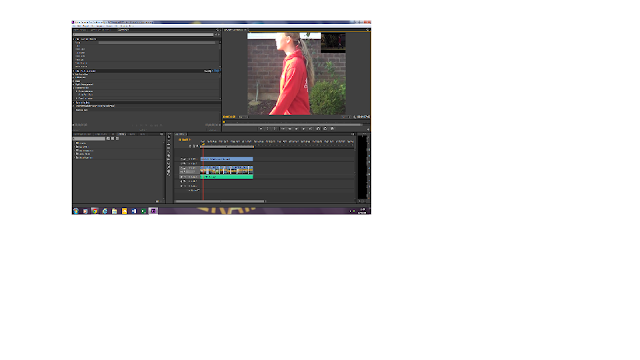
Below is our final remake of the Juno opening scene:
After completing this project and reflecting on it, I found the task quite difficult and struggled with filming and editing the piece so that the timings were correct. This is because I had never helped to film something before and it was difficult knowing how to set up the camera and to film in the best settings. The footage is very blurry and very shaky which makes the quality of the video seem low.
But there was some elements of my Juno Task which was positive, including how well it matched the footage from Juno which we were made to match. Another element which was good about our project was the camera angles which were correct and helped include all the shots that we needed to make our video what it turned out to be.

Below is our final remake of the Juno opening scene:
After completing this project and reflecting on it, I found the task quite difficult and struggled with filming and editing the piece so that the timings were correct. This is because I had never helped to film something before and it was difficult knowing how to set up the camera and to film in the best settings. The footage is very blurry and very shaky which makes the quality of the video seem low.
But there was some elements of my Juno Task which was positive, including how well it matched the footage from Juno which we were made to match. Another element which was good about our project was the camera angles which were correct and helped include all the shots that we needed to make our video what it turned out to be.
Sunday, 4 October 2015
BFI Talk
Today we had a talk from Pete Fraser who came from BFI in London to talk to us about our coursework and how to produce the best film opening we possibly can. I learnt lots of things from Pete today and have even got some inspiration and ideas on what i could do for my film opening. He also showed us previous years film openings and showed us examples of high scoring and low scoring projects, to give us an idea of what sort of level we will have to work at to get the grade we are aiming for.
Here are some of the facts and tips that I gained from Pete Fraser's talk:
Always remember that Film Openings are not trailers, otherwise you will loss the effect in your film and also loss marks for your project.
Key Features of a film opening:
Evaluation
Here are some of the facts and tips that I gained from Pete Fraser's talk:
Always remember that Film Openings are not trailers, otherwise you will loss the effect in your film and also loss marks for your project.
Key Features of a film opening:
- Genre
- Narrative (Enigma code- questions you ask)
- Character
- Atmosphere (What is the world like?/Mood?)
- Setting
Top tips for making a film opening-
- Start General (research different film openings etc.)
- Home in on Specifics (go into more related detail)
- Make your research focused and relevant
www.artofthetitle.com - This website is great for research and film openings and will be useful in the present future.
Title Sequence
This is what should be included in a title sequence to make it seem more effective and to flow better:
- Actors names who are solo in the title sequence for any period of time, are usually most famous actor and the one that everyone is going to see the film for.
- Title flows throughout the entire film opening so does not look like a trailer.
Key Words
Foley= Replacing sounds that you film, to improve it.
Ident= Logo
Organizing your project
A guide to follow, to help organize your project into categories.
Step 1: Take stock
- What's the task
- 20 marks research and planning
- 60 marks construction (video)
- 20 marks evaluation
Tips:
- Build up research
- Build up planning
- Build up skills
- Keep evidence throughout filming
Step 2:
Build up skills-
- Sound
- Camerawork
- Editing
Step 3:
Investigation
Step 4:
Brainstorm ideas-
- Pitches
- Moodboard
- Feedback
Step 5:
Planning-
- Experimenting
- Storyboard
- Logistics
Step 6:
The shoot-
- People, places, props, costumes
- Directing
- Equipment, jobs on the day
Step 7:
Edit-
- Take screenshots of process of editing
Step 8:
Evaluation
Saturday, 26 September 2015
Acronyms
Our teachers each lesson give us different information about analysis techniques, editing etc. and all the information can become very overwhelming. So to help us to be able to remember all this information for our filming projects and analysis projects in the future we are given acronyms for this information. This will be useful when it comes to revising for my exams and for future exercises. Here are the 2 main acronyms that we were given to remember:
Lighting
Actors
Make-up
Props
Setting
For Mise en Scene...
CostumeLighting
Actors
Make-up
Props
Setting
For video analysis...
Describe
In detail
Setting
Themes
Icons- significant props
Narrative
Characters
Textual analysis- camera, editing, sound and mise en scene.
Friday, 25 September 2015
Film editing practice
Film editing practice task:
In lesson I used clips from the bond films and dancing animals to practice my editing skills. This will help me because it will help me gain skills for when I begin to edit more footage and to help me get used to putting effects on clips and transition them together.
This exercise really helped to develop my skills for editing and i learnt how to add sound and music to footage and how to upload to YouTube. This is an important skill to have for the future because I will be making many videos and needing to upload them YouTube.
In lesson I used clips from the bond films and dancing animals to practice my editing skills. This will help me because it will help me gain skills for when I begin to edit more footage and to help me get used to putting effects on clips and transition them together.
This exercise really helped to develop my skills for editing and i learnt how to add sound and music to footage and how to upload to YouTube. This is an important skill to have for the future because I will be making many videos and needing to upload them YouTube.
Film production Logos
Below are some of the big film production companies logos. Including: Walt Disney, Universal, DreamWorks and Paramount. Looking at these logos helped me to design my own logo because I have seen that it is important to have a design that really catches someones eye.

So here is my own logo design...
We were asked to design a logo for our film production company and so I decided to go with the name Action Antics. I decided with this name because it is very catchy, this is because of the alliteration from the two A's that helps the film title flow. I also chose 'action' antics, because my film production company will mainly produce action films.
I decided to use the image of a video tape, which is what your eye is automatically drawn too. I chose this image so that instantly when you see the tape, you know that it is a film company.


So here is my own logo design...
We were asked to design a logo for our film production company and so I decided to go with the name Action Antics. I decided with this name because it is very catchy, this is because of the alliteration from the two A's that helps the film title flow. I also chose 'action' antics, because my film production company will mainly produce action films.
I decided to use the image of a video tape, which is what your eye is automatically drawn too. I chose this image so that instantly when you see the tape, you know that it is a film company.

Institution questions
Low budget films vs High budget films
This is a presentation that a made to show the difference and similarities about Low budget films and High budget films using example of both:
Low budget vs high budget films from Tilly100
I completed a presentation of these question to help me to understand what the difference is between low budget and high budget films, production companies for the films, genre and audience.
I completed a presentation of these question to help me to understand what the difference is between low budget and high budget films, production companies for the films, genre and audience.
Wednesday, 23 September 2015
Film Pitch
Here is our film pitch, for the film that we created...
Media film pitch from Tilly100
Today we were asked to present our film in front of an audience and to be filmed, this is to help get us used to presenting pitches and improving our communication. And to make us feel more confident when we come to presenting other ideas.
The things I enjoyed about pitching our film idea was that I got to present to people all the unique ideas that me and Connor had come up with. Also I enjoyed being given a genre and audience because it was a challenge which helped me think more independently and piece together different ideas. Lastly I really enjoyed working with someone different, for this pitch it was Connor and we got to help each other if the other one of us was stuck when presenting. And it was good bringing different ideas to the table and then discussing which ones fit well with the concept and specification for our film.
Although I did not enjoy being under pressure, in front of a camera and my class. But I think this was because it was my first presentation and first time of being filmed, so after being a couple of times i'm sure i will get used to it.
Media film pitch from Tilly100
Today we were asked to present our film in front of an audience and to be filmed, this is to help get us used to presenting pitches and improving our communication. And to make us feel more confident when we come to presenting other ideas.
The things I enjoyed about pitching our film idea was that I got to present to people all the unique ideas that me and Connor had come up with. Also I enjoyed being given a genre and audience because it was a challenge which helped me think more independently and piece together different ideas. Lastly I really enjoyed working with someone different, for this pitch it was Connor and we got to help each other if the other one of us was stuck when presenting. And it was good bringing different ideas to the table and then discussing which ones fit well with the concept and specification for our film.
Although I did not enjoy being under pressure, in front of a camera and my class. But I think this was because it was my first presentation and first time of being filmed, so after being a couple of times i'm sure i will get used to it.
Sound and editing
Today we learnt on how to analyse sound and editing when watching a clip or a film. Here is what you need to think about:
Camera
- Frame
- Angle
- Movement
(In Media it is useful to create acronyms for analyasis techniques etc. because it helps you to remember them.)
Editing
- Transitions
- Order of narrative (past, present, flashbacks)
- Pace
- SFX (special effects)
Sound
- Dialogue (What-how)
- Music
- Diegetic sound/ non-diegetic
We also learnt about how films are made and what needs to be considered when making a film, like who the film is aimed at and how you will advertise the film when it is released. These are what need to be thought about when making a film:
Characters
- Protagonist/antagonist
- Who will you cast as each of you characters
- Supporting Characters
Mis en Scene
- Has to fit genre
-Setting
Audience
- Given to you- what would they want/expect
Plot/Narrative
- Binary opposition (The five stages)
Title
- That fits with everything
Marketing
- What campaigns would you use?
Camera
- Frame
- Angle
- Movement
(In Media it is useful to create acronyms for analyasis techniques etc. because it helps you to remember them.)
Editing
- Transitions
- Order of narrative (past, present, flashbacks)
- Pace
- SFX (special effects)
Sound
- Dialogue (What-how)
- Music
- Diegetic sound/ non-diegetic
We also learnt about how films are made and what needs to be considered when making a film, like who the film is aimed at and how you will advertise the film when it is released. These are what need to be thought about when making a film:
Characters
- Protagonist/antagonist
- Who will you cast as each of you characters
- Supporting Characters
Mis en Scene
- Has to fit genre
-Setting
Audience
- Given to you- what would they want/expect
Plot/Narrative
- Binary opposition (The five stages)
Title
- That fits with everything
Marketing
- What campaigns would you use?
Monday, 21 September 2015
Institution
The Big Six
This is a photo to show the big six that contribute to the film industry.

So as stated above in this chart the Big Six which are the main productions companies globally. These are:
- Sony =
- Warner Bros =
- 20th Century Fox =
- Paramount =
- Disney =
- Universal =
- Anything up to 2 million dollars is a 'small budget'
- Usually films that are around $250 million are classed as 'high budget films'
Whether a film makes a profit or not is merely down to what time of the year the film is released and whether it suits the audience that the company are aiming for.
The mini majors
These are the two mini majors;
- Lionsgate
- MGM
The best time for films that usually get awards is... Mid October- February (Academy Award nominations).
Also the best time to release children films are from half term until Christmas.
Films are mainly aimed at 16-24 year old, through research it has been discovered that this is the age group that most go to the cinema.
Friday, 18 September 2015
Film Textual Analysis
Boyz n the hood film opening
http://www.bing.com/videos/search?q=boyz+n+the+hood+dutch+subtitles&FORM=HDRSC3#view=detail&mid=BCA98CE309ED50662AF4BCA98CE309ED50662AF4
Camera
In this opening scene of Boyz N The hood the scene and shot is always in the middle of screen, which shows that the characters and the props are the focus. There is a part of the film where the camera is focused on blood and then dissolves into the shot where shown is a picture on the wall (of a child in a grave drawn by a child).
Sound
The sound throughout the film is very aggressive and contains a lot of swearing. Which represents that the characters are young and fairly aggressive. A dog in the background as a parallel sound, and also the music is fast paced. Then seamlessly the sound goes straight to the school.
Editing
The scene is edited to be very dark and black which makes the scene to be mysterious. In the fight scene in the opening scene there is a child in front of the fight scene, which shows the fact that children in the society nowadays see things and experinec they should not have to go through at their age. Becuase the symbol of a child is associated with youth and innocence but this is contrasted with the violence and danger. And also this child is seen to walk away from the scene not being affected and just carries along walking down the street, this shows that the young child must see this sort of violence reguraly so has become the norm.
Mise en scene
Also in this opening scene for young children they are seen hearing shots being fired and seeing a crime scene with blood, which shows the contrast between innocent youth and how the children in this scene have had to mature quicker due to seeing things that no young child should have had to see.


Above these are photos from the film opening of boys in the hood and the film poster for the film, to help give you an idea of what the film looks like.
http://www.bing.com/videos/search?q=boyz+n+the+hood+dutch+subtitles&FORM=HDRSC3#view=detail&mid=BCA98CE309ED50662AF4BCA98CE309ED50662AF4
Camera
In this opening scene of Boyz N The hood the scene and shot is always in the middle of screen, which shows that the characters and the props are the focus. There is a part of the film where the camera is focused on blood and then dissolves into the shot where shown is a picture on the wall (of a child in a grave drawn by a child).
Sound
The sound throughout the film is very aggressive and contains a lot of swearing. Which represents that the characters are young and fairly aggressive. A dog in the background as a parallel sound, and also the music is fast paced. Then seamlessly the sound goes straight to the school.
Editing
The scene is edited to be very dark and black which makes the scene to be mysterious. In the fight scene in the opening scene there is a child in front of the fight scene, which shows the fact that children in the society nowadays see things and experinec they should not have to go through at their age. Becuase the symbol of a child is associated with youth and innocence but this is contrasted with the violence and danger. And also this child is seen to walk away from the scene not being affected and just carries along walking down the street, this shows that the young child must see this sort of violence reguraly so has become the norm.
Mise en scene
Also in this opening scene for young children they are seen hearing shots being fired and seeing a crime scene with blood, which shows the contrast between innocent youth and how the children in this scene have had to mature quicker due to seeing things that no young child should have had to see.
Above these are photos from the film opening of boys in the hood and the film poster for the film, to help give you an idea of what the film looks like.
Thursday, 17 September 2015
Representation of film openings
Representations included in Film openings...
Class
- Lower-class people are seen as being thugs and being violent and living in rough areas.
- Middle-class people are seen as the majority of people and seen as the 'norm', living a normal life.
- Upper-class people in society are stereotyped as being posh and pompous. Also seen as earning a lot of money and wearing nice clothes, jewelry etc.
Age
- People are judged for age
- Teens are stereotyped to be thugs and being irresponsible
- Elderly people are seen as being vulnerable
- Middle aged people are stereotyped as being kind and caring. This is because this is the age group which makes up these stereotypes.
Ethnicity
- People are judged about their race, color and religion.
Gender
- Male
- Female
- Transgender
Sexuality
- People can be either straight, bi-sexual and homo-sexual. Some people are judged for their sexuality.
Today in lesson we were asked to analyse the representation of a film opening of our choice, the film opening I choose was Step Up: Revolution, here is this clip...
In this film opening what is being represented is freedom of being able to express yourself wherever and whenever you want. This is being represented along with the use of youths and how younger people are shown as being reckless and disruptive in the city. This is put across by the youths that are seen parking and getting out of cars and jumping across all the cars on the busy streets of California, people of the public are seen being angry at the disruption caused, you can see this on their facial expressions and body language. This representation of modern youth is made to seem natural, because in society and the media older people see youths as being disruptive and disrespectful, so in this clip it is an accurate representation of how youth is represented in the media also.
The Dyer theory helps to explain how youths are represented, when you think of teens and people in their early 20's we associate them with being foolish, intimidating and disruptive, this is called a stereotype. And this means that us as the viewer automatically feels a certain way about a character, before they even meet them just by stereotypes. An example of the use of the dyer theory in this film opening is that the young dance crew, who are wearing caps and edgy clothes (which stereotypical youths would wear, so the viewer instantly knows that the characters are young) are seen jumping on strangers cars. This represents that the media nowadays believe that the younger generations are damaging and mistreating the world they live in. Almost like how they are damaging the cars.
Whose representation it is, i think is maybe an older person maybe who is middle aged. Because generally the people who have this stereotype of the younger generations are older people. But then in some scenes of the film opening it reflects the interest of the younger people who are dancing because they are almost trying to put across that they have to cause disruption to be able to be seen and taking seriously by older generations. Because younger generations are seen in society as not as knowledgeable or as powerful as their elders, so they are trying to prove them wrong by causing disruption and showing them the dancing talent that they have.
People make sense of the representation in this opening scene because they already associate this stereotype of teens and so can see that the editor is trying to represent youth and how younger generation want to have a voice too. Considering Barthes concept in this idea of youth it shows that his idea of myth does not occur in this clip because it is trying to show that life is not easy and that it is not all like a fairy tale. And making reference to Mulvey's theory on male gaze towards a women is shown is this clip but in a more modern approach, when there is a scene where the females are dancing and male onlookers on the street are admiring them dancing. But there is also women watching the females dance which could represent equality and that women in the modern world are not there for a males pleasure.
There are few uses of semiotics in this film opening, one of these signs is the use of cameras which represents how the dance crew want people to see them and want to make a statement to the entire internet. Through this film opening I have learnt about the overall representation of the signs and there meanings. I have learnt that the characters want to make a statement that even though they are young they can use the power of technology to gain more attention and be more powerful.
I believe I have received the meaning of the film through negotiated meaning because when me as the audience watch the clip it shows younger generations as being rebellious and disruptful so I automatically feel a certain way about the characters before even have the choice to make my mind up for myself. Also before I've even watched the clip the piece in the title that says "revolution" already makes us feel that the characters are going to be rebellious. This is the theory of Stuart Hall who believes that the text influences the audience and alters their opinion.
This is my view on the representations in the film opening of Step Up: Revolution.
Class
- Lower-class people are seen as being thugs and being violent and living in rough areas.
- Middle-class people are seen as the majority of people and seen as the 'norm', living a normal life.
- Upper-class people in society are stereotyped as being posh and pompous. Also seen as earning a lot of money and wearing nice clothes, jewelry etc.
Age
- People are judged for age
- Teens are stereotyped to be thugs and being irresponsible
- Elderly people are seen as being vulnerable
- Middle aged people are stereotyped as being kind and caring. This is because this is the age group which makes up these stereotypes.
Ethnicity
- People are judged about their race, color and religion.
Gender
- Male
- Female
- Transgender
Sexuality
- People can be either straight, bi-sexual and homo-sexual. Some people are judged for their sexuality.
Today in lesson we were asked to analyse the representation of a film opening of our choice, the film opening I choose was Step Up: Revolution, here is this clip...
In this film opening what is being represented is freedom of being able to express yourself wherever and whenever you want. This is being represented along with the use of youths and how younger people are shown as being reckless and disruptive in the city. This is put across by the youths that are seen parking and getting out of cars and jumping across all the cars on the busy streets of California, people of the public are seen being angry at the disruption caused, you can see this on their facial expressions and body language. This representation of modern youth is made to seem natural, because in society and the media older people see youths as being disruptive and disrespectful, so in this clip it is an accurate representation of how youth is represented in the media also.
The Dyer theory helps to explain how youths are represented, when you think of teens and people in their early 20's we associate them with being foolish, intimidating and disruptive, this is called a stereotype. And this means that us as the viewer automatically feels a certain way about a character, before they even meet them just by stereotypes. An example of the use of the dyer theory in this film opening is that the young dance crew, who are wearing caps and edgy clothes (which stereotypical youths would wear, so the viewer instantly knows that the characters are young) are seen jumping on strangers cars. This represents that the media nowadays believe that the younger generations are damaging and mistreating the world they live in. Almost like how they are damaging the cars.
Whose representation it is, i think is maybe an older person maybe who is middle aged. Because generally the people who have this stereotype of the younger generations are older people. But then in some scenes of the film opening it reflects the interest of the younger people who are dancing because they are almost trying to put across that they have to cause disruption to be able to be seen and taking seriously by older generations. Because younger generations are seen in society as not as knowledgeable or as powerful as their elders, so they are trying to prove them wrong by causing disruption and showing them the dancing talent that they have.
People make sense of the representation in this opening scene because they already associate this stereotype of teens and so can see that the editor is trying to represent youth and how younger generation want to have a voice too. Considering Barthes concept in this idea of youth it shows that his idea of myth does not occur in this clip because it is trying to show that life is not easy and that it is not all like a fairy tale. And making reference to Mulvey's theory on male gaze towards a women is shown is this clip but in a more modern approach, when there is a scene where the females are dancing and male onlookers on the street are admiring them dancing. But there is also women watching the females dance which could represent equality and that women in the modern world are not there for a males pleasure.
There are few uses of semiotics in this film opening, one of these signs is the use of cameras which represents how the dance crew want people to see them and want to make a statement to the entire internet. Through this film opening I have learnt about the overall representation of the signs and there meanings. I have learnt that the characters want to make a statement that even though they are young they can use the power of technology to gain more attention and be more powerful.
I believe I have received the meaning of the film through negotiated meaning because when me as the audience watch the clip it shows younger generations as being rebellious and disruptful so I automatically feel a certain way about the characters before even have the choice to make my mind up for myself. Also before I've even watched the clip the piece in the title that says "revolution" already makes us feel that the characters are going to be rebellious. This is the theory of Stuart Hall who believes that the text influences the audience and alters their opinion.
This is my view on the representations in the film opening of Step Up: Revolution.
Wednesday, 9 September 2015
Film Openings
In our lesson today we looked at how films are made to captivate the viewer!!!!!
Enigma Codes
The creator of the enigma codes was Roland Barthes. He highlighted that films like to give audiences questions, that they will want answered. This is so that the viewer will want to watch more.
Claude Levi-Strauss
Claude Levi-Strauss introduced the idea that in films they use binary oppositions, which means two opposites put together (e.g. A good character vs a bad character).
Narrative
Tzvetan Todorov was the creator of the narrative theory which is the narrative and narrative structure and how they affect our perception of films.
There is 5 steps to the narrative theory, here they are:
Step 1) Equilibrium- the setting is established.
Step 2) Disruption- The story takes a particular direction.
Step 3) Recognition of disruption- Characters and events are interwoven.
Step 4) Attempt to repair disruption- Try to solve the issue.
Step 5) Reinstatement of equilibrium- Matters are sorted out, problems are solved and questions answered.
In the film opening for Harry Brown teens are preserved as being thugs and being very aggressive. They are seen exchanging drugs, riding motorbikes and shooting innocent people. This is to represent how the society feel that all teenagers are like this.
The opening is split into two parts, the first half is set on an underground in a rough part of London at night which makes it more eerie. The second half is set in a park, which is thought to be a safe happy place is replaced with a dangerous, violent place.
The theme is a thriller and a significant prop in the film opening is the gun which represents violence. The speech in this clip is very aggressive and is mainly swearing. There is a gang of teenagers and a women with her baby, yo6u are left feeling sorry for them. The shots are fast cut, with lots of shots that have been edited.
In the film opening of clueless it shows a rich teenager girls everyday life and where she is placed in society. And how she believes she is better than everyone else. This represents the hierarchy of the middle class and upper class in society. The setting is in a teenagers American style house and at a pool party and also at a high school that the school attends, it is set during the daytime.
The main themes throughout the film opening is a teen comedy and a few significant props throughout are shopping bags and material items (E.g. car, expensive clothes and a big house). This represents how the teen girl is spoilt and has a lot of material things, maybe these are to distract her from something bad going on in her life.
There is a lot of speech in this film opening, from the most showed character which is the teen girl. It is mainly narrative, because she tells us all about her life as the video plays. I think they may have maybe choosen a blonde girl to play this part, to be ironic of how blonde haired girls are associated with not being very bright. So it is being very stereotyical.
Enigma Codes
The creator of the enigma codes was Roland Barthes. He highlighted that films like to give audiences questions, that they will want answered. This is so that the viewer will want to watch more.
Claude Levi-Strauss
Claude Levi-Strauss introduced the idea that in films they use binary oppositions, which means two opposites put together (e.g. A good character vs a bad character).
Narrative
Tzvetan Todorov was the creator of the narrative theory which is the narrative and narrative structure and how they affect our perception of films.
There is 5 steps to the narrative theory, here they are:
Step 1) Equilibrium- the setting is established.
Step 2) Disruption- The story takes a particular direction.
Step 3) Recognition of disruption- Characters and events are interwoven.
Step 4) Attempt to repair disruption- Try to solve the issue.
Step 5) Reinstatement of equilibrium- Matters are sorted out, problems are solved and questions answered.
In the film opening for Harry Brown teens are preserved as being thugs and being very aggressive. They are seen exchanging drugs, riding motorbikes and shooting innocent people. This is to represent how the society feel that all teenagers are like this.
The opening is split into two parts, the first half is set on an underground in a rough part of London at night which makes it more eerie. The second half is set in a park, which is thought to be a safe happy place is replaced with a dangerous, violent place.
The theme is a thriller and a significant prop in the film opening is the gun which represents violence. The speech in this clip is very aggressive and is mainly swearing. There is a gang of teenagers and a women with her baby, yo6u are left feeling sorry for them. The shots are fast cut, with lots of shots that have been edited.
In the film opening of clueless it shows a rich teenager girls everyday life and where she is placed in society. And how she believes she is better than everyone else. This represents the hierarchy of the middle class and upper class in society. The setting is in a teenagers American style house and at a pool party and also at a high school that the school attends, it is set during the daytime.
The main themes throughout the film opening is a teen comedy and a few significant props throughout are shopping bags and material items (E.g. car, expensive clothes and a big house). This represents how the teen girl is spoilt and has a lot of material things, maybe these are to distract her from something bad going on in her life.
There is a lot of speech in this film opening, from the most showed character which is the teen girl. It is mainly narrative, because she tells us all about her life as the video plays. I think they may have maybe choosen a blonde girl to play this part, to be ironic of how blonde haired girls are associated with not being very bright. So it is being very stereotyical.
Subscribe to:
Posts (Atom)